Vision6.0/10
Craft5.0/10
Cohesion5.5/10
Resonance5.5/10
Your project sits in an interesting tension: you're working with objects that are, by their nature, performed — toys are made to be played with, posed, animated by a child's imagination. So when you place them against landscapes, you're asking the viewer to meet you halfway, to lean into the artifice rather than away from it. The strongest moments in this sequence are the ones where you let quiet do the work, and the weakest are where the staging shouts.
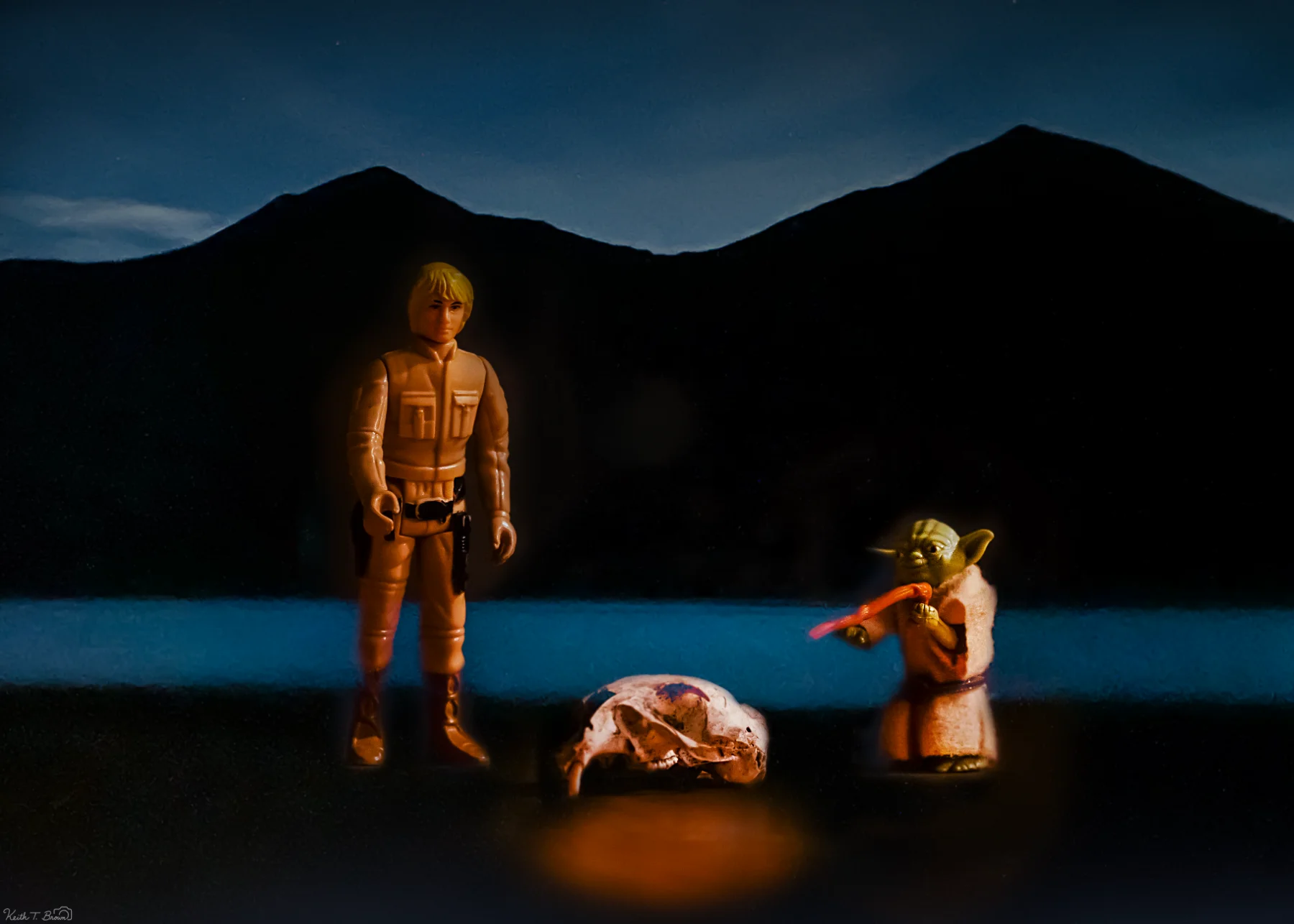
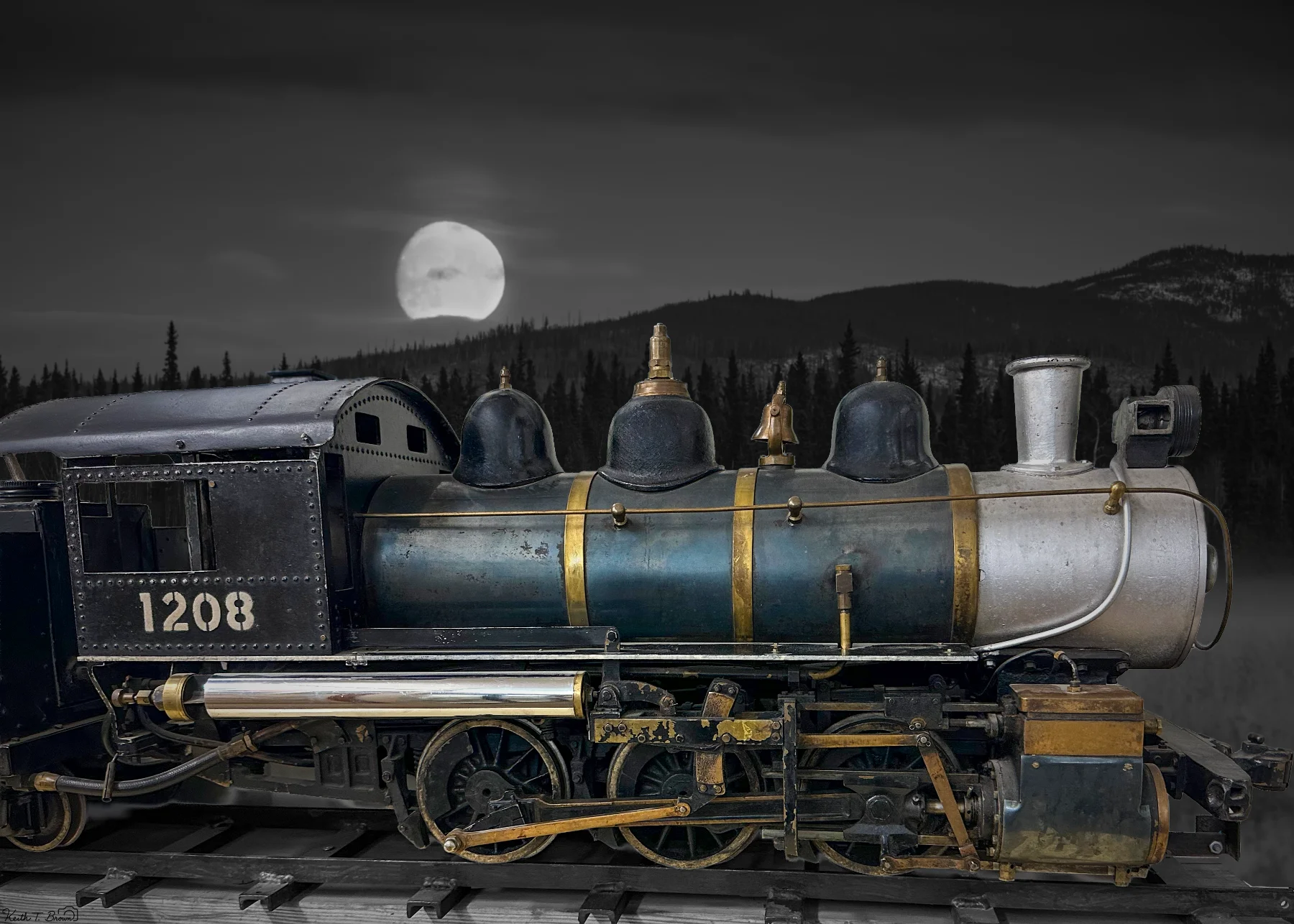
The fifth frame, the locomotive under the moon, is where your eye is sharpest. The desaturated sky, the single warm glow of the moon, the patina on the metal — there's a held breath in it. Nothing is trying too hard. The locomotive feels like it's remembering something rather than performing for us. The second frame, the Star Wars figures on the dim landscape, has a similar pull for me: the low warm light catching Luke's face, the small huddled shape on the ground between them, the mountains barely separated from the sky. It feels like a scene paused mid-thought. That image, for me, is the closest you come to the memory-state your statement is reaching for.
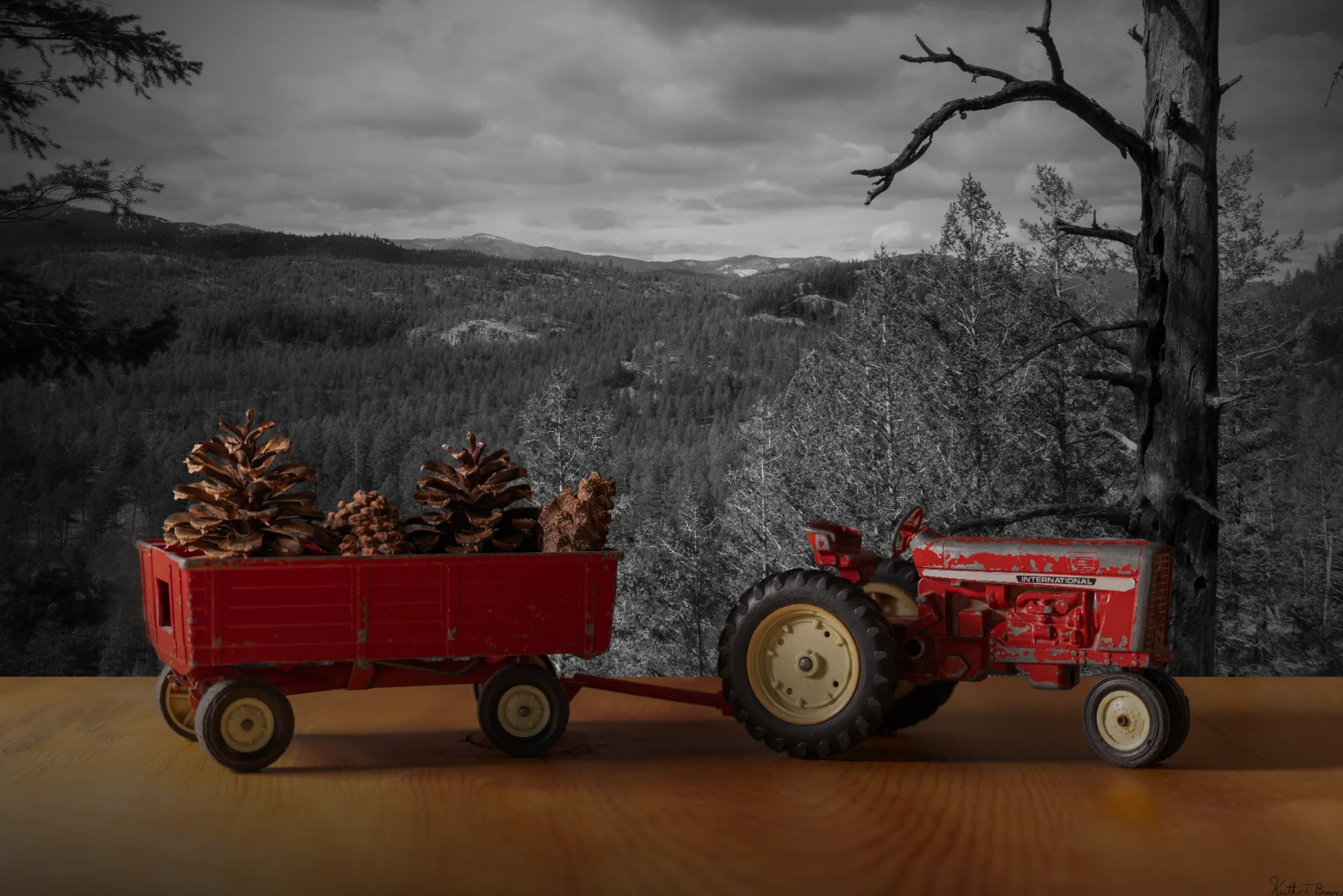
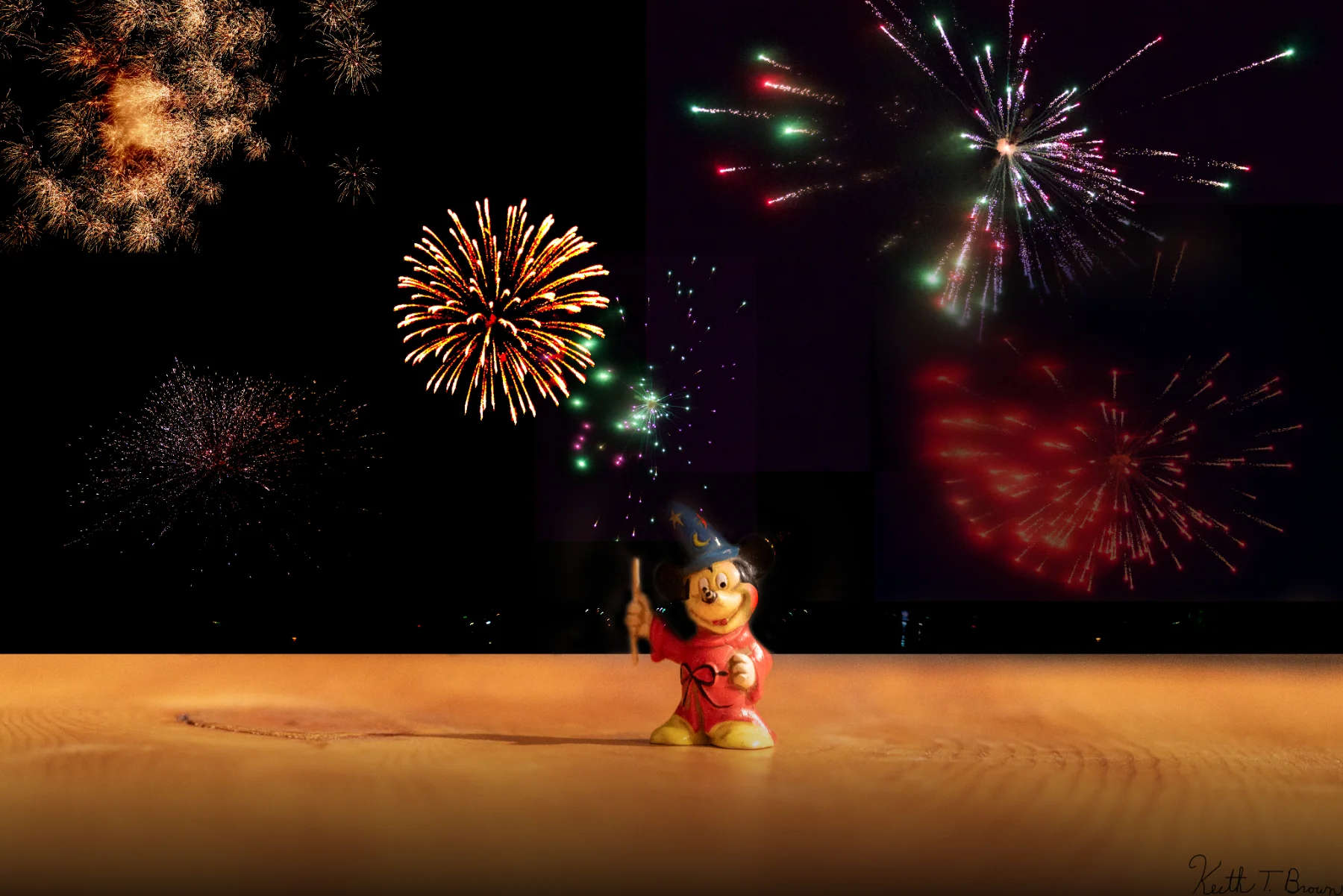
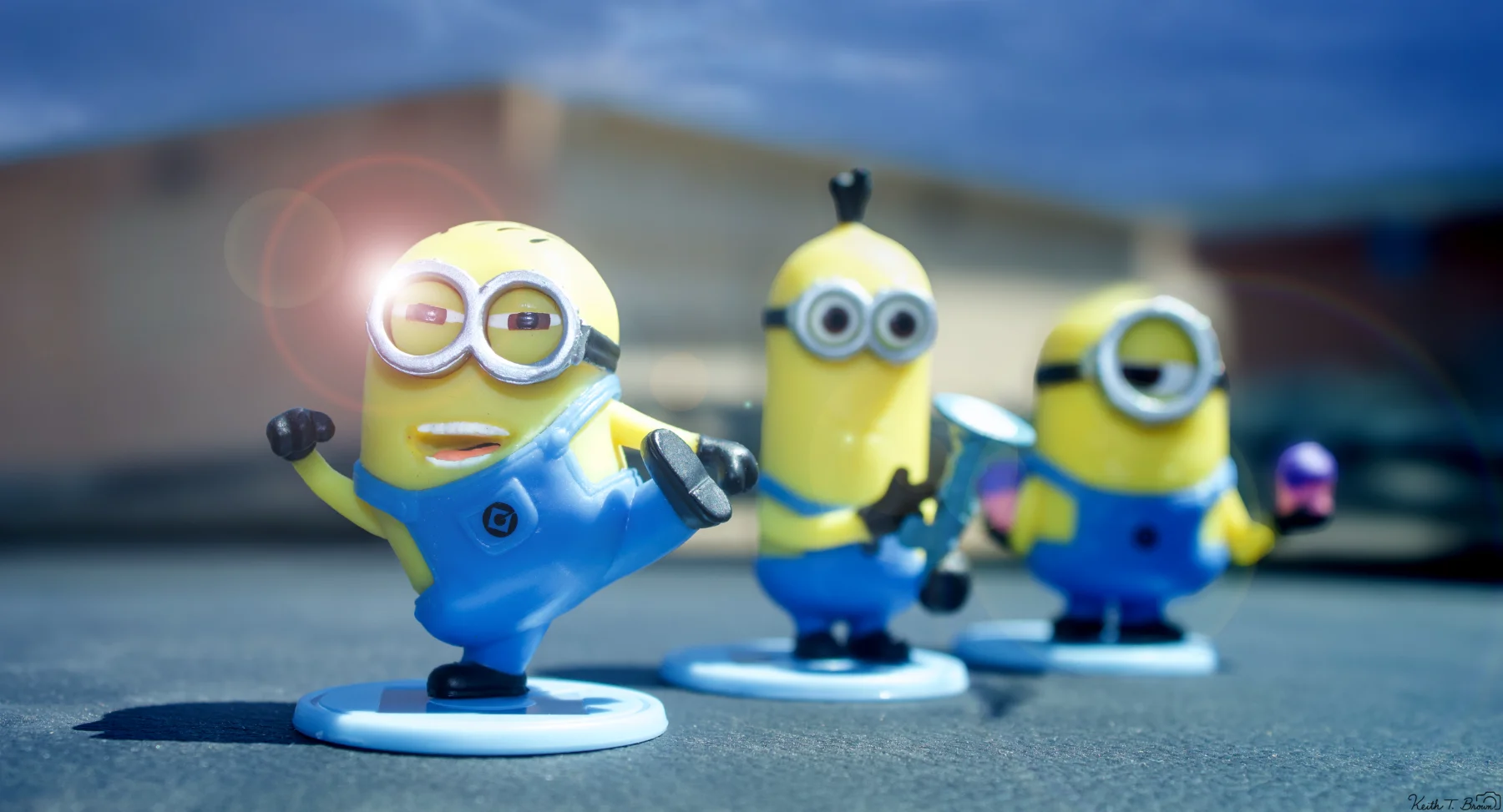
The first frame, the red tractor with pinecones, leans on a familiar selective-color move — red object, desaturated world — and the wooden tabletop edge is visible, which breaks the illusion you've otherwise built. The third frame, the Mickey figure against fireworks, is charming as an idea but the composited fireworks feel pasted rather than witnessed; the figure sits alone on a vast empty tabletop and the eye has nowhere intimate to land. The fourth frame, the minions, is the loudest of the set — bright sun, posed action, glossy plastic — and it pulls against the contemplative mood the rest of the sequence is building. It feels like a different project.
Now, gentler suggestions for where you might push. Your statement says "memories and imagination," and memory tends to be soft, partial, low-contrast. The locomotive and the Star Wars frames understand this. Consider whether every image in the set wants that same emotional register, and let the louder ones go — or shoot them differently. A minion in soft overcast light, slightly out of focus, found on a curb rather than posed, would feel more like a memory than three of them arranged mid-leap in direct sun.
On craft: try working with one light source rather than mixed light, especially for the indoor or tabletop setups. In the tractor image, the toy is lit flatly from the front while the backdrop has its own separate light logic — that mismatch is what tells our eye "composite." If you light the toy to match the direction and softness of the light in the backdrop (a window on an overcast day is your friend here — soft, directional, free), the two worlds start to belong to each other. Also: get your camera lower. Toy-height. When we played with these things as kids, our eyes were inches from them. A low angle would put us back in that body.
Finally, think about hiding the seams. The visible tabletop edge in frame one, the flat ground plane in frame three — these are the moments the spell breaks. You can crop tighter, blur the foreground, or shoot through grass, dust, a windowsill — anything that gives the toy a world to sit *in* rather than *on*. The memory you're chasing lives in those small textures.
Strengths
- The locomotive frame achieves a genuinely held, contemplative mood through restrained color and a single soft light source.
- The Star Wars scene uses warm low light and a small huddled central element to create real narrative intimacy.
- Your instinct to desaturate backdrops so the toy carries the color is a clear, consistent voice choice across the set.
- The project concept itself — toys against real landscapes as memory triggers — is a strong, workable through-line.
What to try next
- Match your light: notice the direction (left, right, above) and softness of light in your backdrop, then light the toy the same way — an overcast window is a free, forgiving soft light to practice with.
- Shoot from toy-height; getting the camera down to the figure's eye level puts the viewer back into a child's body and makes the scene feel inhabited rather than observed from above.
- Hide the seams — crop out visible tabletop edges, or shoot through foreground texture (grass blades, dust, a blurred object close to the lens) so the toy sits *in* a world rather than *on* a surface.
- Edit for emotional consistency: the minions frame is bright and posed while the rest of your set is quiet and memory-toned — consider whether every image belongs to the same mood, and be willing to cut the ones that don't.
- Try the rule of thirds in the fireworks frame: placing Mickey off-center, smaller in the frame, with more negative space above, would make him feel like he's watching something vast rather than standing alone on a stage.
HushLensWideOpen Curator
AuthenticatedLensWideOpenMay 24, 2026 · 2:10 PM UTC