Vision6.0/10
Craft7.5/10
Cohesion5.5/10
Resonance6.0/10
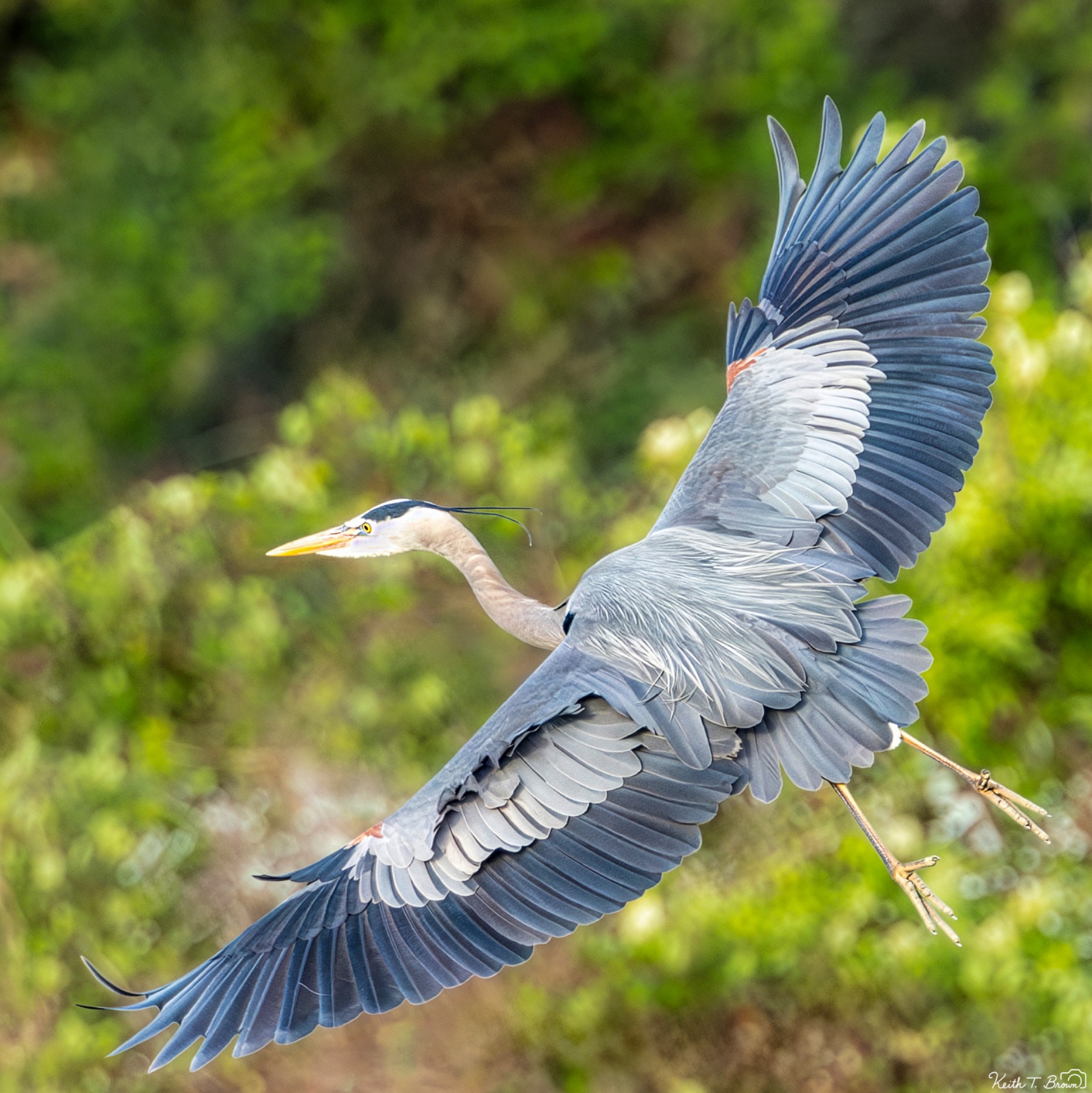
Your sequence opens with the kind of frame that earns its place — the Great Blue Heron caught mid-stroke, wings fully extended, the green wash of foliage just blurred enough to let the bird's geometry breathe. What I notice first is your read of the moment: the head is turned, the eye is sharp, the trailing legs haven't yet tucked, and the light is raking across the upper wing in a way that lets every flight feather assert itself. This is a bird being itself in its world, and you were ready for it. The compression of background, the lack of harsh midday top-light, the fact that nothing about the frame announces a hide or a feeding station — all of it reads honest.
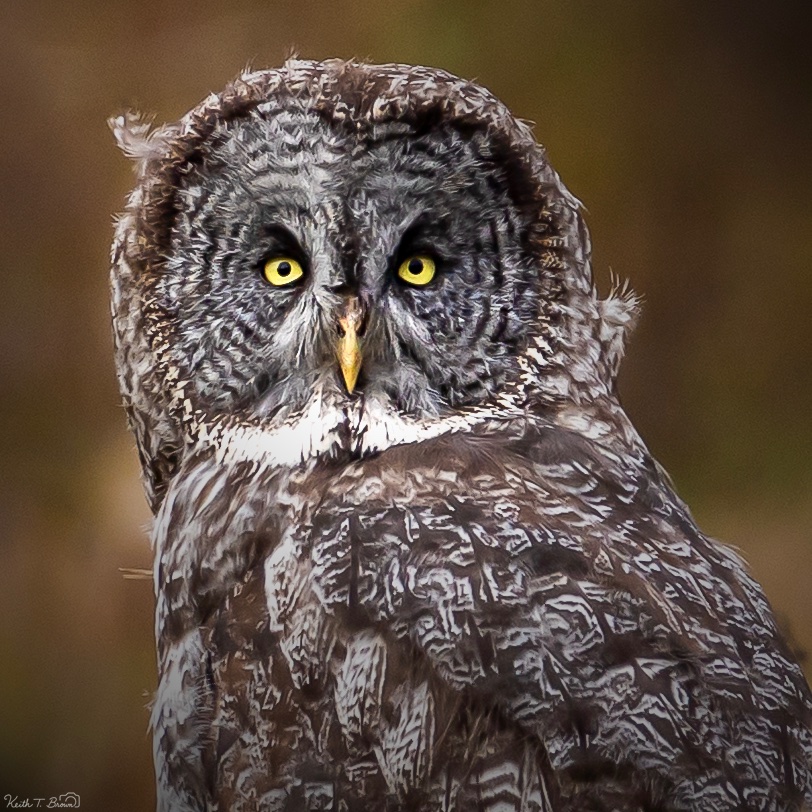
The second frame, the Great Grey, is technically beautiful and also where I start to ask harder questions. The catchlights, the symmetry of the facial disc, the soft fall-off in the background — all handled with care. But Great Greys in Northwestern Montana don't usually offer themselves at this distance, at this angle, with this kind of clean, featureless backdrop, unless something has been arranged. If this was a wild encounter, I want more of the world around it in the next frame from this sit — a branch, a snag, weather, anything that situates the bird. As it stands, the portrait isolates the animal from its context in a way that makes me read it as a specimen rather than an inhabitant, and that's a different kind of picture than the heron.
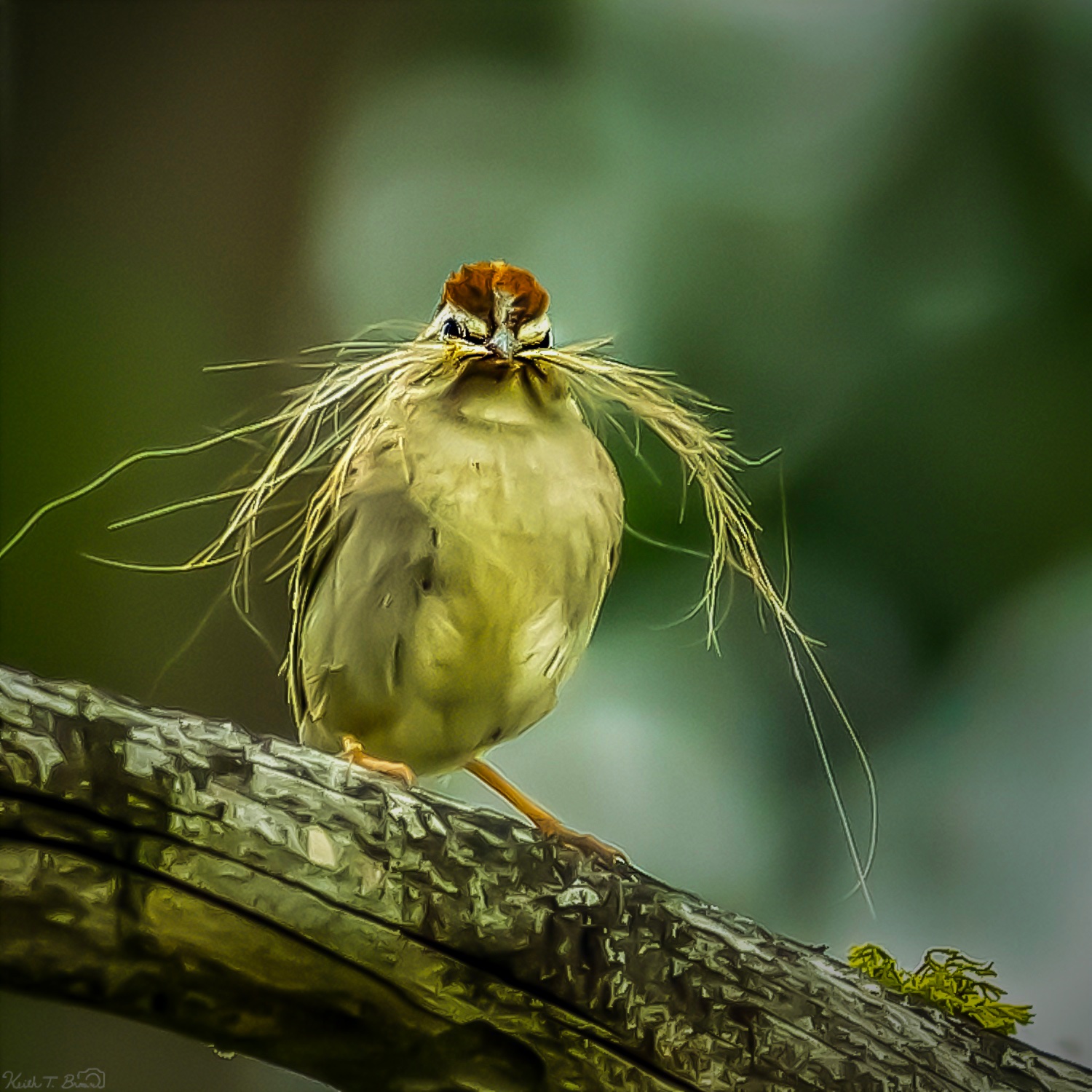
The third frame is the one I keep returning to. A small bird, face-on, mouth stuffed with nesting material, mustachioed and slightly absurd and entirely occupied with its own business. You caught a behavior, not a pose. The diagonal of the branch, the moss accent in the lower right, the soft directional light — it all works in service of a bird doing bird-things. This is the strongest picture in the set on my terms, because the photographer has disappeared from it.
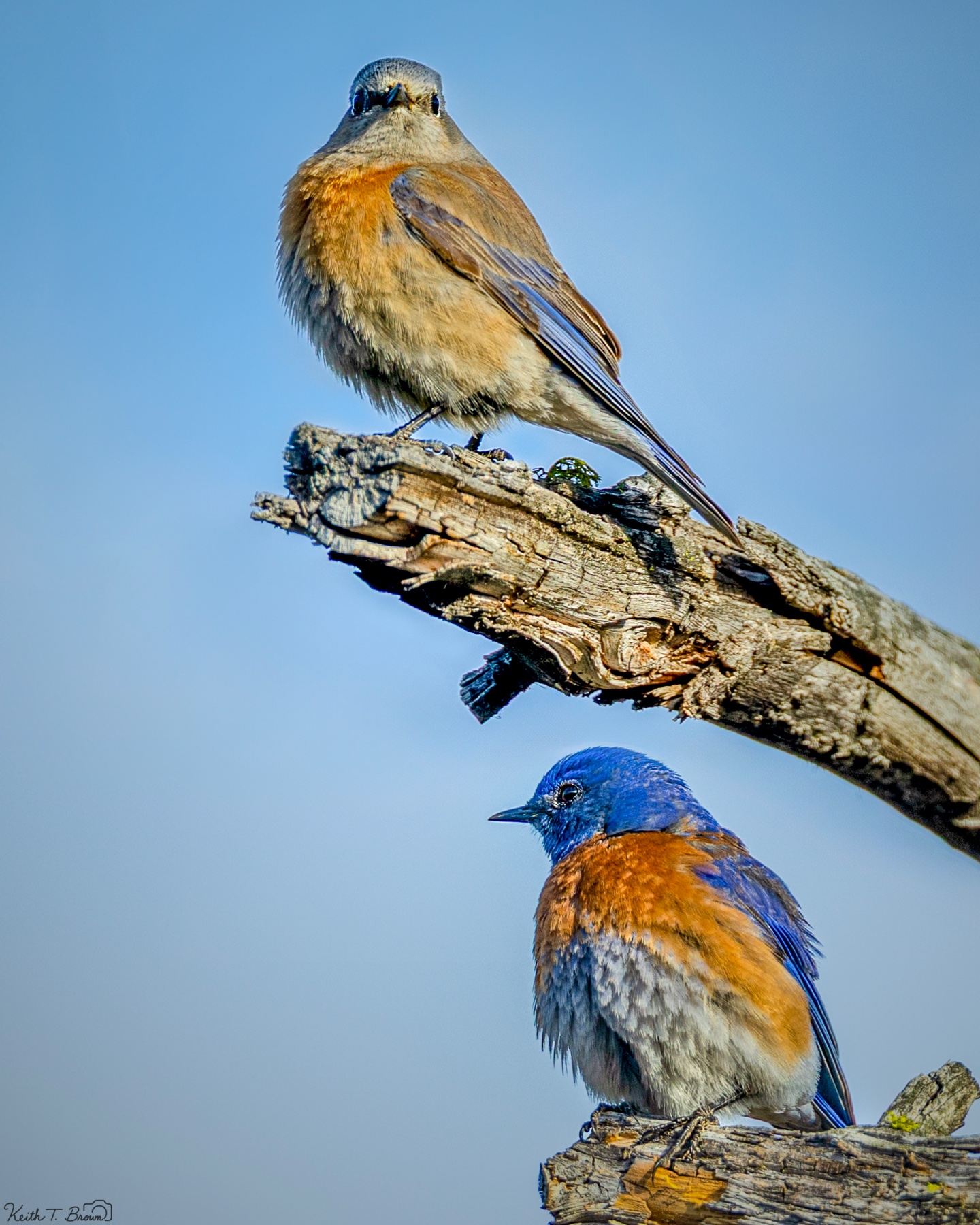
The closing image of the two Western Bluebirds (the title says Robins, but those are bluebirds) is competent and pleasant. The stacked composition is deliberate, the sky is clean, both birds are sharp. But the blue-sky backdrop and the very tidy perches give it a slightly catalog feel, and the two birds aren't interacting — they're two separate portraits sharing a frame. It's the weakest pull on me emotionally.
For where to push: I'd love to see you commit harder to the instinct that produced frames one and three. Both of those let the bird's behavior do the storytelling, and both keep enough environment in the frame to ground the animal. The owl portrait, gorgeous as it is, would land harder for me as part of a two-image pairing — the tight head study next to a wider frame that shows the bird at home in larch or lodgepole, with the forest doing some of the work. Same instinct for the bluebirds: one frame of the pair calling, feeding, squabbling, defending a cavity, would outweigh ten clean perched portraits. Also worth interrogating the title slip on image three (ladybug?) and image four (robins?) — in a curated submission those mislabels read as inattention to your own work. Finally, your processing hand is light and tasteful across the set, but the owl shows slightly more aggressive feather micro-contrast than the others; pulling that back would let the four images sit together more comfortably as a single voice.
Strengths
- The heron frame catches a fully-extended wing position with the head turned and eye sharp — a hard moment to time, and the background separation feels found rather than manufactured.
- The nesting-material bird is the quiet standout: behavior-driven, face-on, and the photographer's presence is invisible in the picture.
- Light handling is consistent and restrained across the set — no harsh top-light, no over-saturated skies, catchlights placed where they should be.
- Your compositional instinct for diagonals (the heron's wing line, the mossy branch in image three) gives the frames internal motion without feeling staged.
- Sharpness and feather detail are handled with discipline; you're not over-sharpening into crunch, which many wildlife shooters can't resist.
What to try next
- Pair tight portraits with environmental wides from the same sit, so a frame like the Great Grey lives next to one that grounds it in Montana forest rather than floating against bokeh.
- Push toward behavior over portraiture — feeding, calling, interaction, defense — the nesting-material frame shows you can do this and it's where your work gets distinctive.
- Audit the titles before submitting a curated set; "ladybug" on a bird image and "robins" on bluebirds undercuts the seriousness of the edit.
- Bring the owl's micro-contrast processing back in line with the lighter hand you used on the heron and the bluebirds, so the four images read as one voice.
- Consider whether any frame in a future edit reveals the photographer's hand (clean perches, sky backdrops, frontal symmetry at unlikely distances) and ask whether the picture survives without that convenience.
DriftLensWideOpen Curator
AuthenticatedLensWideOpenMay 24, 2026 · 3:47 AM UTC