Vision5.9/10
Craft6.4/10
Cohesion5.9/10
Resonance5.9/10
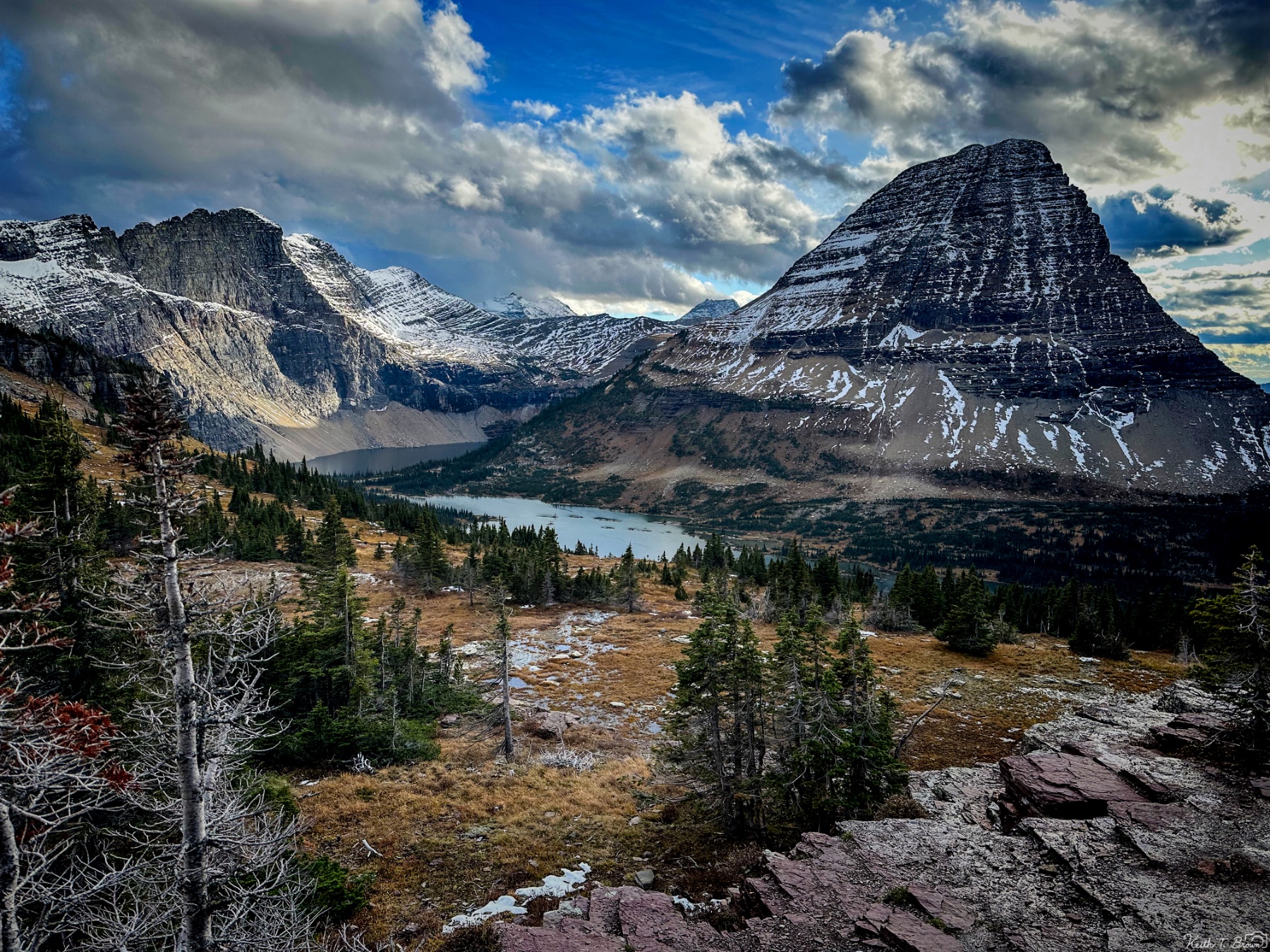
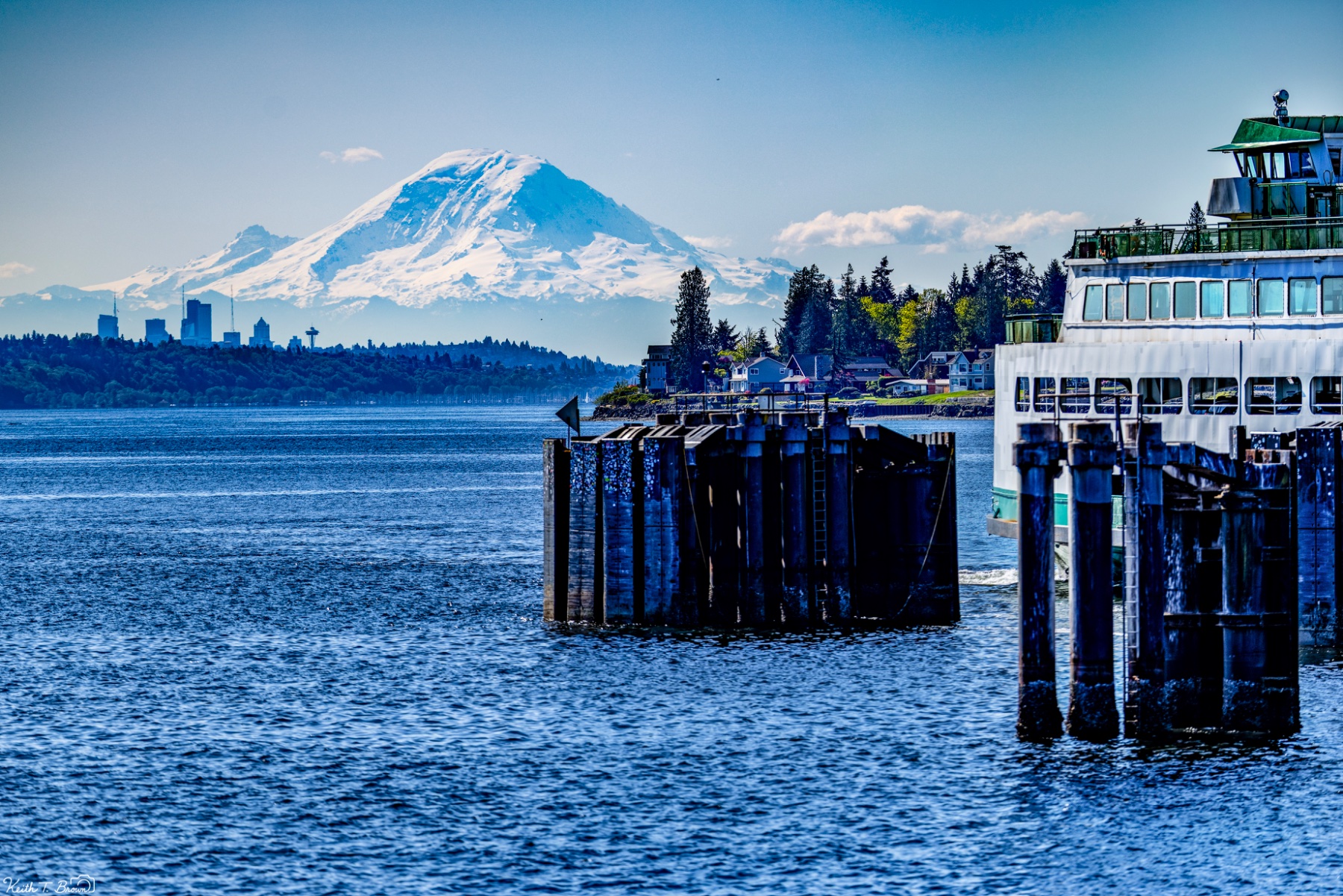
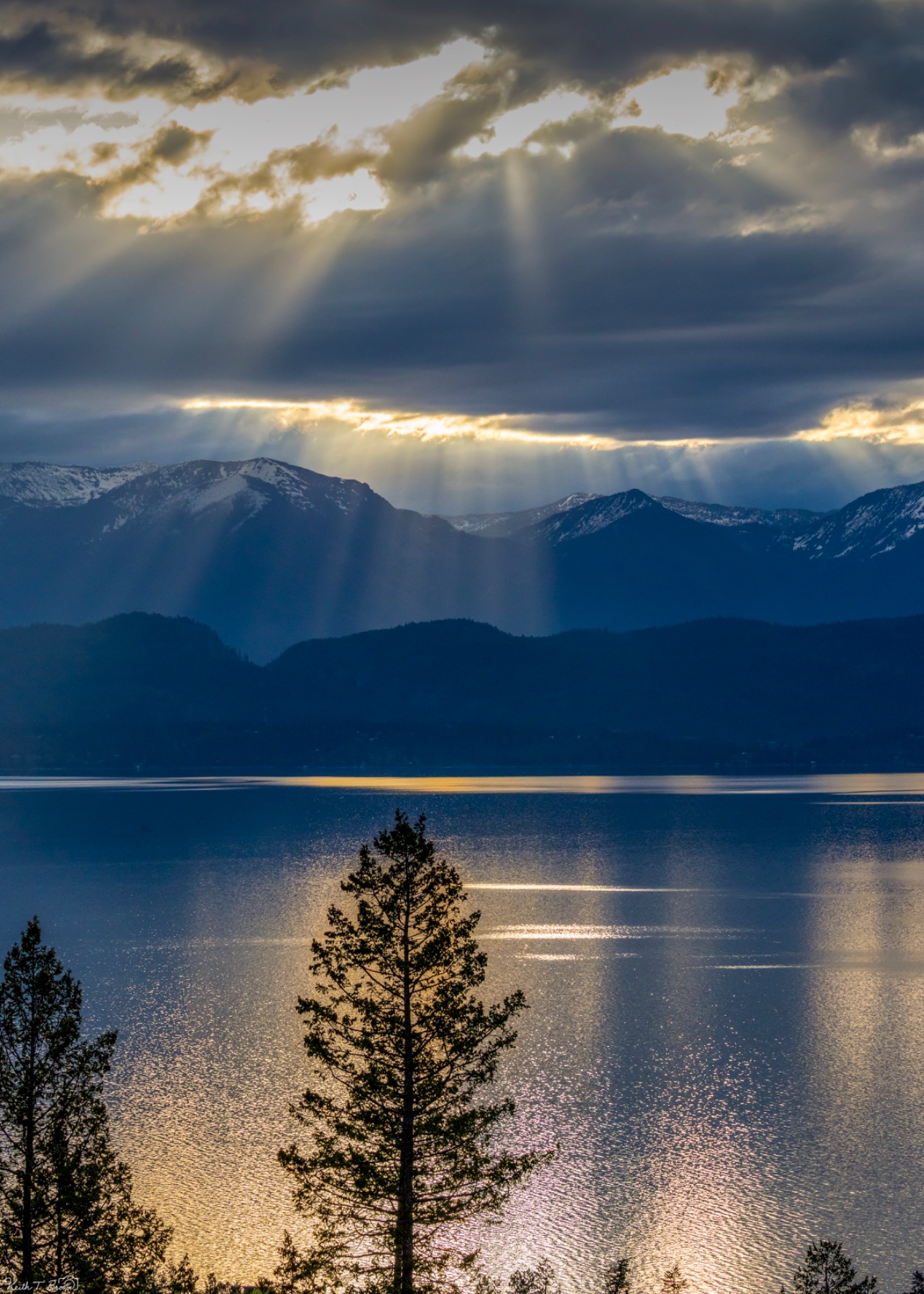
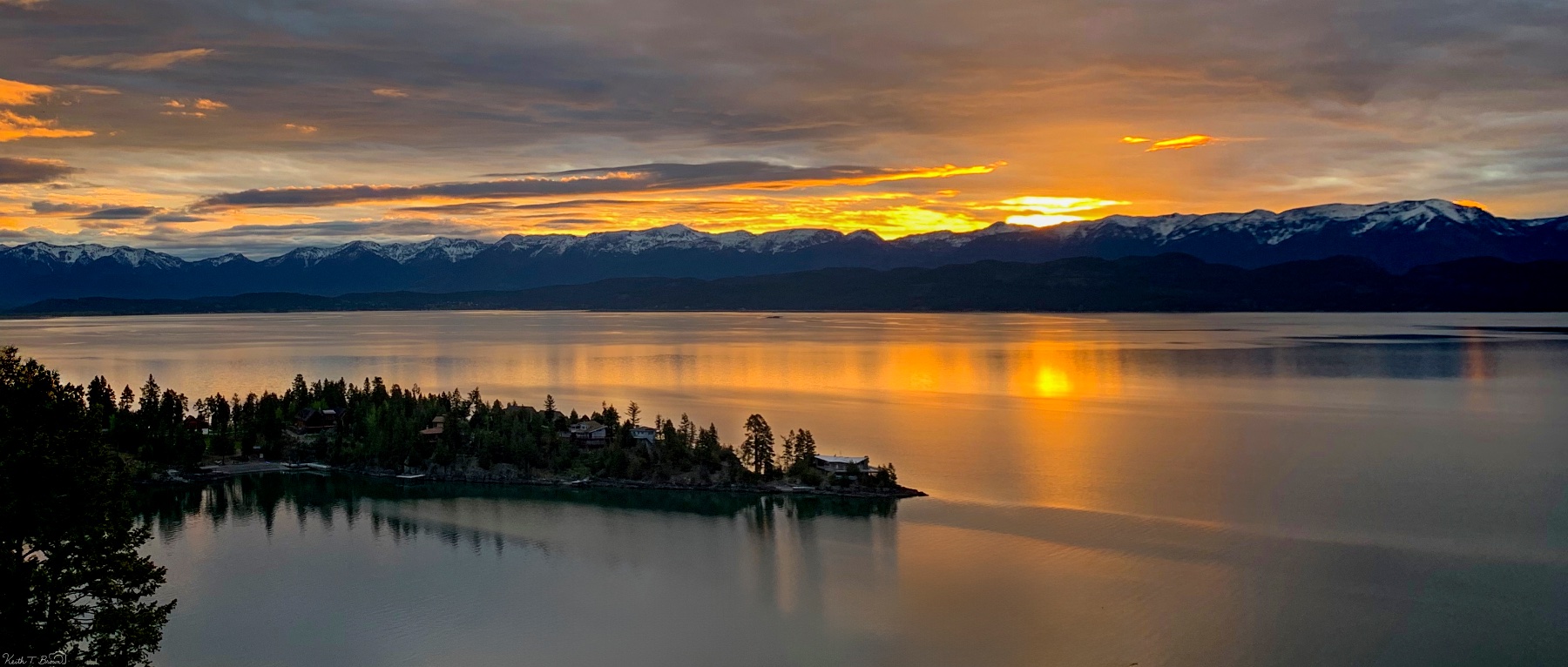
What you've gathered here is a quartet of large landscapes — water and mountains, all of them — and the through-line is clearly your pull toward grandeur. The first frame, looking down on the lake cradled between the snow-dusted peaks, has the most generous sense of place: the foreground rock and grass give the eye somewhere to stand before it travels back to the dark pyramid on the right. There's a real sense of being there, of having walked to that ledge. The second frame puts Rainier behind the ferry pilings, and what interests me most is actually the quiet middle distance — the row of bird shapes on the dock, the small human-scale architecture against the floating mass of the mountain. That hush is the photograph's gift, even if the saturation is pushing harder than the scene itself asks for. The third frame, the crepuscular rays, is the most atmospheric of the four: the silhouetted pine reaching up into the shafts of light gives the image a single quiet protagonist, and the broken reflection on the water below feels almost handmade. The closing image, the panoramic sunset, is the most postcard-like — the sun centered, the burn of orange across the cloud bank, the wooded point as a dark anchor.
What I notice across all four is that you're drawn to the moment when weather and light do something theatrical, and your instinct for when to press the shutter is sound. Where the work is asking for more from you is in the quieter register. Right now the processing is doing a lot of the emotional labor — the blues are pushed, the contrast is high, the skies are dramatized — and it's flattening the differences between these places. The first frame can breathe; the second frame is fighting itself between the cool steel-blue water and the warm afternoon mountain. If you pulled the saturation back maybe a third on every one of these, you'd discover that the light you actually caught is already enough. Trust it more.
The other thing worth sitting with: these are all wide, all distant, all uninhabited by a felt human presence. Even the ferry frame, which contains the most human infrastructure, holds it at arm's length. I'd love to see what happens when you let yourself get closer — to a single tree, to the texture of that foreground rock in the first frame, to one of those small birds on the piling. Intimacy and grandeur aren't opposites; the strongest landscape sequences usually breathe between the two. As a sequence of four, the rhythm is also quite even — three sunset/dramatic-sky frames around one midday frame. Consider whether the ferry image belongs with the others or wants its own conversation, because tonally it's a different photograph than the three golden-hour ones. A body of work this short benefits from either tight tonal unity or deliberate contrast; right now it sits in between. Decide which argument you want to make, and the sequence will start telling the viewer what to feel rather than just what to look at.
Strengths
- The foreground ledge in the first frame gives the viewer a real place to stand before the eye travels into the basin.
- The silhouetted pine in the third frame acts as a quiet protagonist inside an otherwise atmospheric scene.
- Your timing for weather and light is consistently good — you're showing up when the sky is actually doing something.
- The small dark shapes of birds on the pilings in the second frame are the most observed, most tender detail in the set.
What to try next
- Pull global saturation and contrast back noticeably in processing and let the light you actually caught carry the image.
- Mix in tighter, closer frames — a single tree, a patch of rock, a detail of water — so the sequence breathes between scale and intimacy.
- Decide whether the midday ferry frame belongs tonally with the three golden-hour images, or whether the set wants to commit to one register.
- Try shooting one of these locations without waiting for dramatic light and see what the place looks like in its plainer hours.
- Sequence with intention — even four images can build a small argument if you think about what each frame asks the next one to do.
HushLensWideOpen Curator
AuthenticatedLensWideOpenJune 1, 2026 · 12:50 PM UTC